Introduction
For many home care providers, covering rotas is a daily challenge. Ensuring all visits are covered just one day ahead often becomes the primary focus for office teams. Managing rotas in a timely, organized, and structured manner—days or even weeks in advance—while ensuring satisfaction for everyone involved, including clients, care professionals, and office staff, feels unachievable for most providers.
Everyone involved in home care understands that scheduling is a complex task. Multiple factors contribute to this complexity, posing challenges that require experience, knowledge, and careful consideration from those responsible for rota planning and management. These challenges include:
- Meeting individual client care needs within their preferred time frames.
- Matching care professionals’ skills to specific tasks and responsibilities.
- Managing workforce availability to ensure optimal daily coverage across all locations.
- Ensuring care workers receive enough hours within their availability.
- Handling travel time and route planning efficiently and cost-effectively.
- Ensuring continuity of care to maintain consistent carer-client relationships.
- Complying with regulations related to minimum pay, working hours, rest periods, and travel time.
One approach that has proven effective in addressing many of these challenges is the "run-based" approach. This method of scheduling is designed to ensure that all client visits are covered and delivered in an organized and structured way. While implementing runs may initially require some setup time, once in place, they eliminate much of the daily scheduling chaos that many care providers experience.
In this blog, we will explore the definition and meaning of a "run" in home care, as well as the numerous advantages that the run-based approach to scheduling offers to home care providers, their employees, and clients alike.
Definition of Run
In the context of home care, a “run” refers to a structured and organized schedule that groups a series of recurring client visits into a logical sequence for a care professional to follow during their shift. Since runs create defined and predictable patterns, they can be templated and assigned to a small group of care professionals whose availability matches the required hours.
Runs are typically created by grouping visits for clients who:
- Have similar care needs requiring specific skills and training (e.g., PEG Feeding Run, Stoma Care Run).
- Have gender preferences (e.g., Female Only Run).
- Require multiple care professionals due to reduced mobility or challenging behaviours (e.g., Double-Up Run).
- Live in close geographical proximity (e.g. location-based runs).
While the first three types of runs help organize schedules and enable more efficient allocation of human resources, they can also create logistical issues that significantly impact care delivery and operational efficiency.
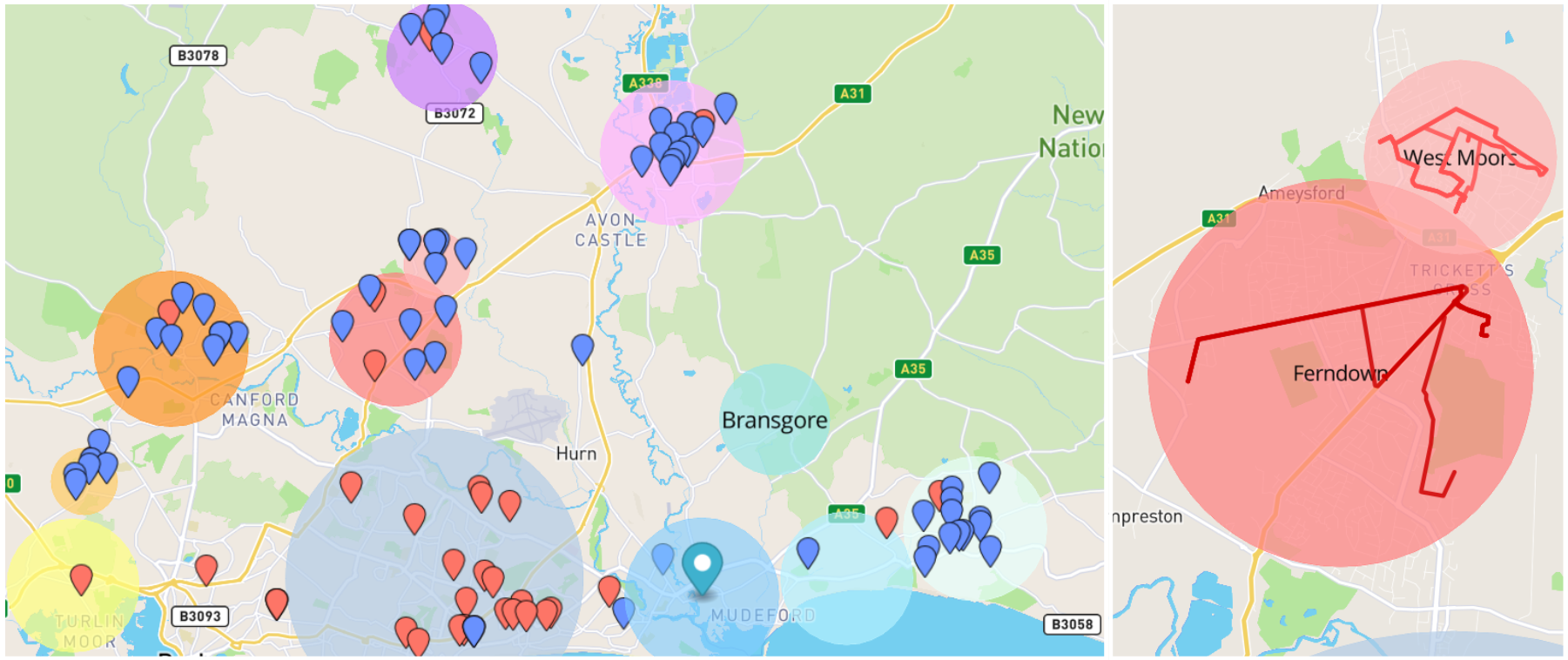
The real value of runs becomes evident when they are created based on the geographical proximity of clients. Therefore, in this blog, a “run” is defined as a structured and organized schedule that groups a series of recurring client visits into a logical sequence based on their geographical proximity, allowing a care professional to follow it during their shift.
The Benefits of Runs in Home Care
Organizing client visits into runs—especially location-based runs—does much more than create a tidy schedule; it has the potential to transform the entire business. The run-based approach offers numerous advantages to home care providers, their employees, and clients alike. Below are the key benefits grouped by category:
1. Benefits for the Home Care Business
- Scheduling Efficiency & AutomationA run-based approach streamlines scheduling by grouping client visits into structured, organized, and predictable patterns. Runs can be templated, enabling an automated scheduling process that saves time and reduces the administrative burden on office teams.
- Optimized Travel & MileageGrouping care visits into location-based runs optimizes travel time and mileage, significantly reducing unnecessary commutes. This approach makes home care provision more reliable, efficient, and cost-effective.
- Reduced Operational CostsBy minimizing travel between visits through optimized logistics, businesses can significantly lower operational costs, including mileage expenses, travel time, and paid idle periods.
- Increased CapacityShorter travel times between visits allow care professionals to complete more visits per shift. This increased capacity enables providers to grow their services without immediately needing to hire additional staff.
- Environmental SustainabilityRun-based scheduling helps reduce and control the distances travelled by care professionals. Careful planning and route optimization lower carbon emissions, contributing to a more environmentally responsible home care model.
- Growth OpportunitiesRuns highlight unutilized gaps between visits, enabling businesses to make informed decisions about where to accept new clients and how many can realistically be accommodated. This fosters safer and more sustainable growth management.
- Improved Staff RetentionPredictable runs allow care professionals to better plan their personal lives by offering consistent rotas in designated locations. With maximized client contact time and minimized idle time, this approach enhances job satisfaction and reduces staff turnover rates.
- Targeted & Cost-effective Recruitment and HiringReviewing each run helps managers quickly identify staffing needs, including the required number of employees, their locations, and their availability. This targeted approach streamlines recruitment and hiring processes, making them more efficient and cost-effective.
- Knowledge RetentionRuns are easily templatable, ensuring operational continuity even during management changes. Critical knowledge is preserved, minimizing disruptions to service provision.
- Optimized Response to Changing NeedsViewing all visits within the context of a run allows managers to quickly assess how changes to one visit impact others within the same run. This enables timely and safe adjustments without disrupting overall service delivery.
- Compliance with RegulationsA run-based approach enhances a home care business's ability to monitor compliance with regulations concerning minimum pay, working hours, and rest periods. Clearly defined run structures ensure that care professionals’ schedules adhere to legal requirements, reducing the risk of noncompliance.
2. Benefits for Staff
- Reduced Travel, Maximized Contact TimeBy organizing client visits into geographically optimized runs, care professionals spend significantly less time traveling between appointments and more time providing care. This reduces travel-related stress and allows care professionals to dedicate more time to their clients instead of commuting.
- Maximized Utilization of Staff AvailabilityWell-built runs make the most of staff availability by maximizing client contact time and minimizing travel time, with no downtime between visits. This optimization not only makes care professionals’ workdays more efficient but also increases their sense of accomplishment.
- Better Work-Life BalanceAssigning care professionals to consistent runs offers them more predictable work schedules, which provides greater stability and enhances work-life balance.
- Continuity of CareConsistent runs foster stronger relationships between care professionals and clients. When carers visit the same clients on a predictable schedule, trust and familiarity grow, leading to stronger bonds. This stability improves both the quality of care and client satisfaction, while increasing job fulfilment for care professionals.
- Improved Matching
Runs allow for better matching between care professionals and clients by considering factors such as location preferences, skills, competencies, and availability. This ensures that the right staff are assigned to the right group of clients, enhancing both the quality of care and job satisfaction.
3. Benefits for Clients
- Continuity of CareWhen clients are organized into runs, they benefit from having the same care professionals assigned to them consistently. This continuity fosters deeper rapport and builds trust over time, enhancing the overall quality of care.
- Timely and Reliable ServiceOptimized, location-based runs enable care professionals to adhere to their schedules more efficiently, minimizing delays and the likelihood of missed visits. This gives clients a sense of security, knowing that their care will be delivered punctually, reinforcing trust and confidence in the care provider.
- Improved Quality of CareWith reduced travel times and organized schedules, care professionals can focus more on meeting client needs during each visit. Instead of rushing between appointments care professionals can provide more personalized, attentive, and higher-quality care, positively impacting the client's physical, emotional, and social well-being.
- Greater Satisfaction and Well-BeingThe consistency and predictability of regular visits contribute to a stable routine for clients, enhancing their overall sense of well-being. Having familiar professionals visit at regular times fosters peace of mind and security, leading to higher client satisfaction and emotional comfort, ultimately improving outcomes.
Conclusion
Ultimately, a run-based approach to scheduling is a powerful method that positively impacts not just care providers, but also their staff and clients. As more organizations adopt this method, they not only streamline their internal operations and elevate the quality of care provided but also contribute to a more sustainable model of home care that benefits everyone in the community.
At Runwiz, we take pride in being the only home care management software specifically designed for implementing and managing runs. Our software empowers organizations to harness the full potential of this approach, ensuring that every aspect of care delivery is well-coordinated and effective.
Contact us today to discover how you can fully utilize runs in your organization and reap all the benefits that the run-based approach has to offer.